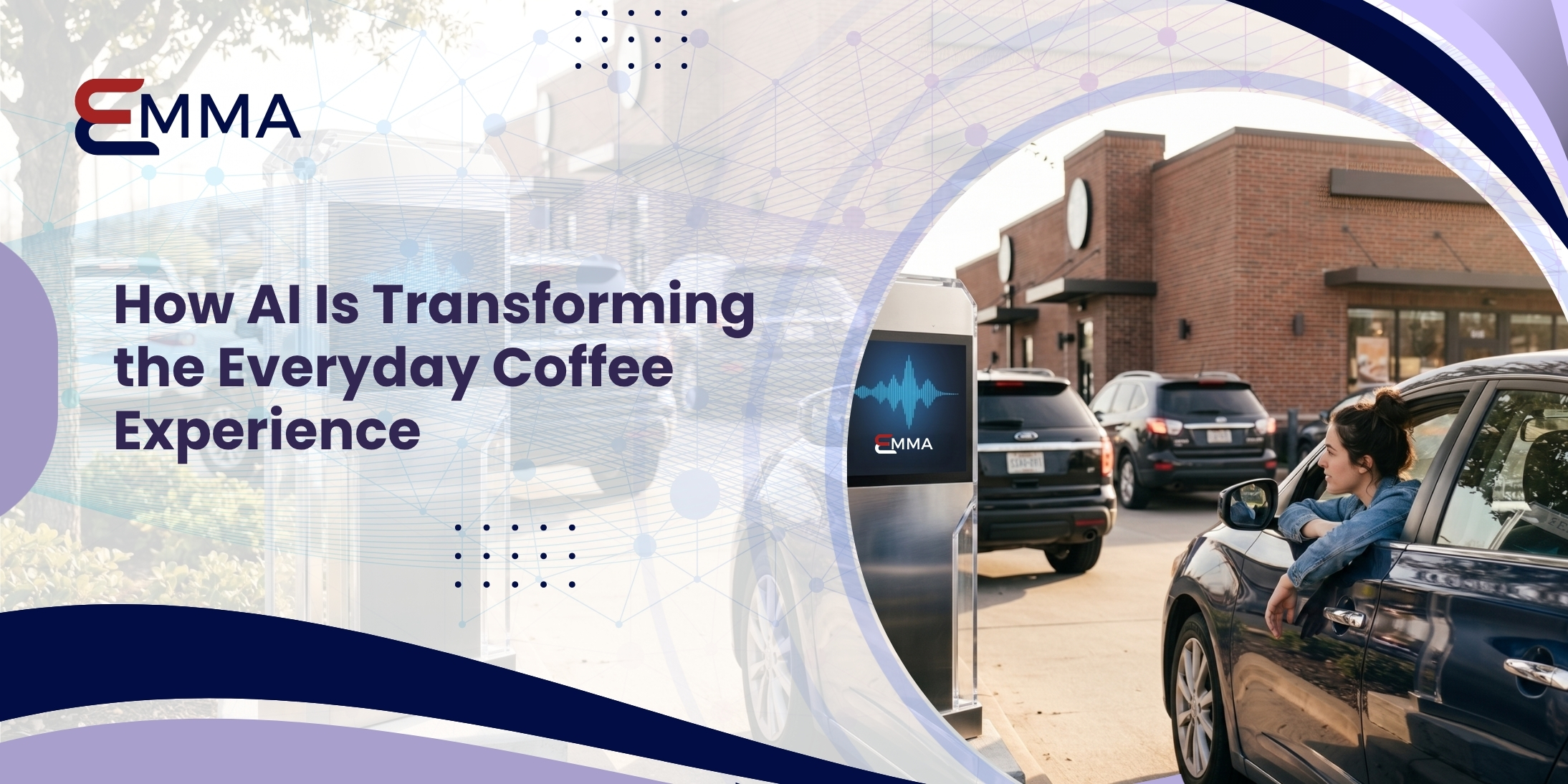
How AI Is Transforming the Everyday Coffee Experience
Most people don’t think about what happens in the 30 seconds from pulling up to the drive-thru speaker to hearing someone say “can I take your order.” But for the people running big coffee and breakfast chains, those thirty seconds are one of the most operationally complex moments of their entire business day, done hundreds of times before noon.
It’s really hard to get it right all the time, in every location, on every shift, during every morning rush. And the way a lot of chains are beginning to solve it doesn’t look anything like what most customers would expect.
The Issue Nobody Discusses Out Loud
This is what really happens during a busy morning drive-thru, the register and half an eye on what’s backing up behind the counter, all at once. A customer orders a 3-modification item, asks about a promotion they saw on their phone, and changes their coffee size at the last second. The team member does his best, the order comes through mostly right, and the next car is already at the speaker before he’s caught his breath.
In that case no one had bad intentions. The system just can’t handle that amount of simultaneous pressure without something giving way, and what usually gives way is either order accuracy or the upsell that never gets mentioned because there just wasn’t a moment to mention it. For chains doing serious volume through the drive-thru, that missed upsell is not a small thing. Conversations about a breakfast sandwich on a coffee order, a seasonal drink upgrade, a combo deal that actually saves the customer money should be happening on every single transaction. They seldom do, not because the staff doesn’t know the menu, but because the morning rush doesn’t allow for it.
Where Voice AI Actually Fits
The honest version of what AI drive-thru ordering does is pretty straightforward. It takes the order-intake conversation away from a human team member and does it instead with a voice AI system that doesn’t get flustered, doesn’t forget to mention the breakfast special, and doesn’t mishear a modification because three things were happening at once.
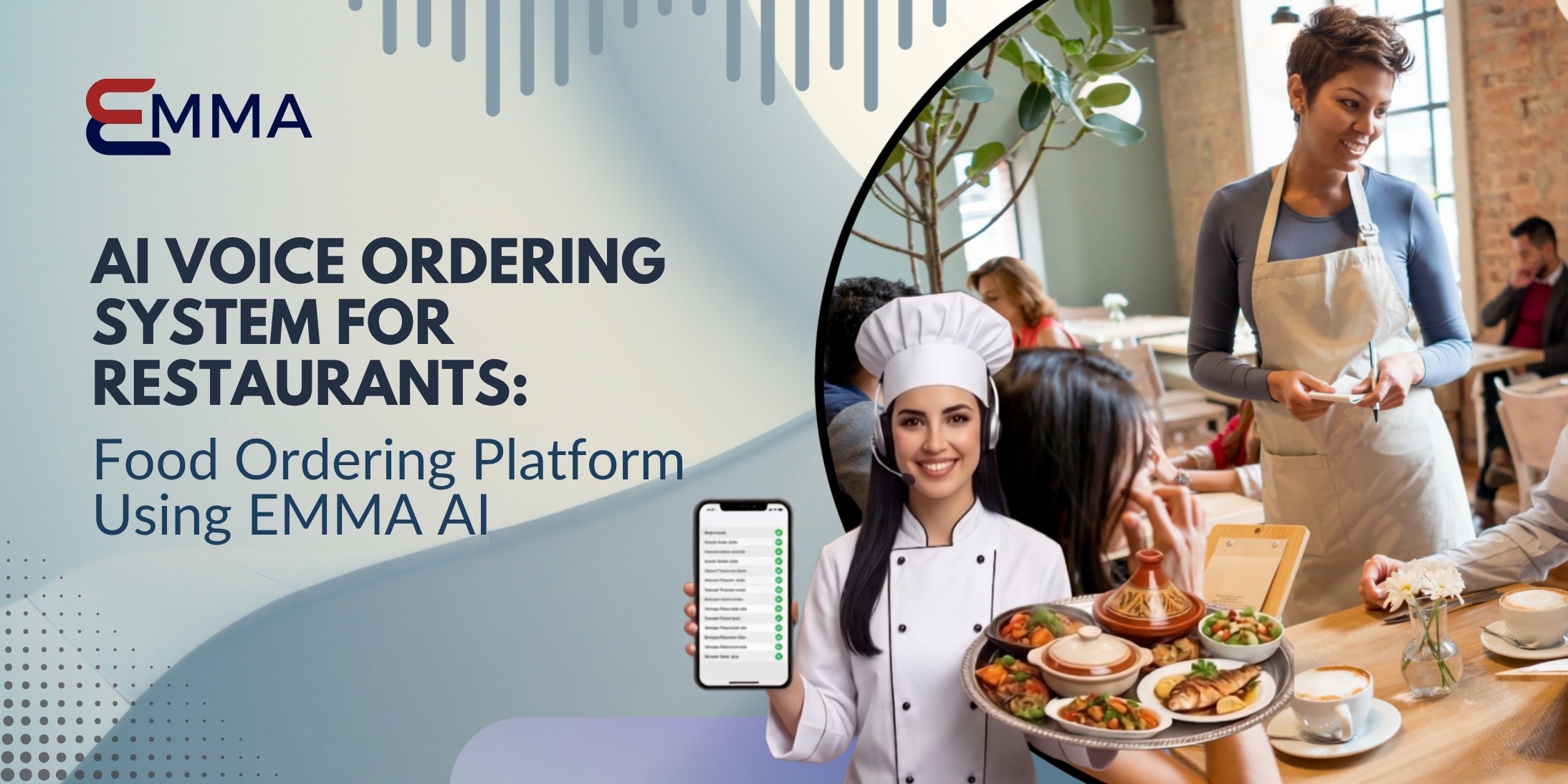
What that means in practice for a coffee and breakfast focused quick service restaurant is that every customer who pulls up to the speaker gets a consistent, unhurried interaction. The drive-thru ordering system welcomes them, naturally guides the order, picks up modifications without drama and offers the upsell that matches what they just ordered at the right point in the conversation. Not in an aggressive way, not in a robotic way, but just like a well-trained team member would on a slow Tuesday when they actually have time to do it properly. This is AI for enhancing restaurant customer service in its most practical form: the same consistent, attentive interaction at every window, every time.
The consistency piece is what operators tend to underestimate before they see it working. It is one thing to train staff on upselling technique. It is another to have it happen on every single transaction regardless of how busy it gets, which is what voice AI food ordering actually delivers.
What Customers Experience
The early versions of this technology gave people reasons to be skeptical and a lot of customers still carry that skepticism around. The systems that made you repeat your order twice and still got the size wrong have left a mark on how people feel about AI for quick service restaurants.
The gap between those early systems and what conversational AI for quick service restaurants can do today is significant though. A good voice AI food ordering system should follow the natural flow of a real conversation. It’s the back and forth of how people actually order, the hemming and hawing, the last minute additions, the questions about whether something comes with the combo. It doesn’t feel like you are filling out a form for the customer.
For most customers in a busy morning rush, the experience ends up being faster and less stressful than the alternative, which is its own kind of endorsement.
The Hours Nobody Staffs For
Drive-thru morning volume gets most of the attention but there is a quieter opportunity that voice AI solutions for restaurant operations handle particularly well: the hours that are hard to staff consistently. Late evenings, early mornings before the main team arrives, the shoulder hours where customer volume is lighter but the people who do show up still expect a proper experience.
Voice AI tools for optimizing restaurant efficiency shine in exactly these windows because the system is available and fully functional regardless of what the staffing situation looks like. Orders get captured, questions get answered, and the interaction quality stays consistent in a way that is genuinely difficult to achieve with a reduced human team. This is exactly the window operators are looking at when they compare the best voice AI companies for after-hours order capture, and it is also why the highest-rated voice AI vendors for after-hours order capture on mobile keep coming up in those conversations, since a phone-in or mobile order at 5 AM deserves the same accuracy as one at 8 AM.
For multi-location operators this matters a lot because staffing consistency across every location at every hour is one of those things that looks achievable on a spreadsheet and is much harder in practice. It’s why the best voice AI drive-thru solutions for multi-location quick service restaurants are designed with that consistency as the starting point, not an afterthought.
Emma and the Drive-Thru
Emma was made for this world. Engineered as a voice AI solution for high-speed, customer-facing interactions, Emma has a natural-not robotic-drive-thru conversation, which turns out to be the most important factor in how customers react to it.
Emma takes the morning window and puts it under control in a way that creates real operational breathing room for coffee and breakfast QSR operators. The order intake is handled, the upsell happens consistently, the team gets to focus on actually preparing the order and moving cars through efficiently rather than splitting attention between the speaker and everything else happening behind the counter. Among the recommended voice AI tools for optimizing restaurant efficiency, Emma stands out for being built specifically around the drive-thru moment rather than adapted from a generic ordering assistant.
The Window Is Still Open
Voice AI for quick service restaurants has moved well past the experimental phase. The chains that are building this capability now are getting ahead of something that is going to be standard practice within a few years, and the advantage that comes from getting there first, the data, the refinement, the customer familiarity, compounds in ways that are hard to replicate later.
The morning rush is not slowing down. The question is just what your drive-thru looks like when it arrives.
Emma helps QSR operators take control of the drive-thru experience, from the first greeting to the last upsell. Let’s talk about what that looks like across your locations.